Solo Travel in Korea as a Woman: Is It Safe, and Where Should You Actually Go?
Short answer: yes, it is safe, and if you only have one spare weekend, go to Gyeongju and stay the night. I have done this trip three times now, twice alone, and the overnight version is the one I keep repeating. Korea sits at a crime index of 22.66 and ranks in the top ten worldwide for solo female travel safety (korealocally), and honestly, the statistic matches what my body feels at 10pm in a provincial town with my phone out and my bag unzipped.
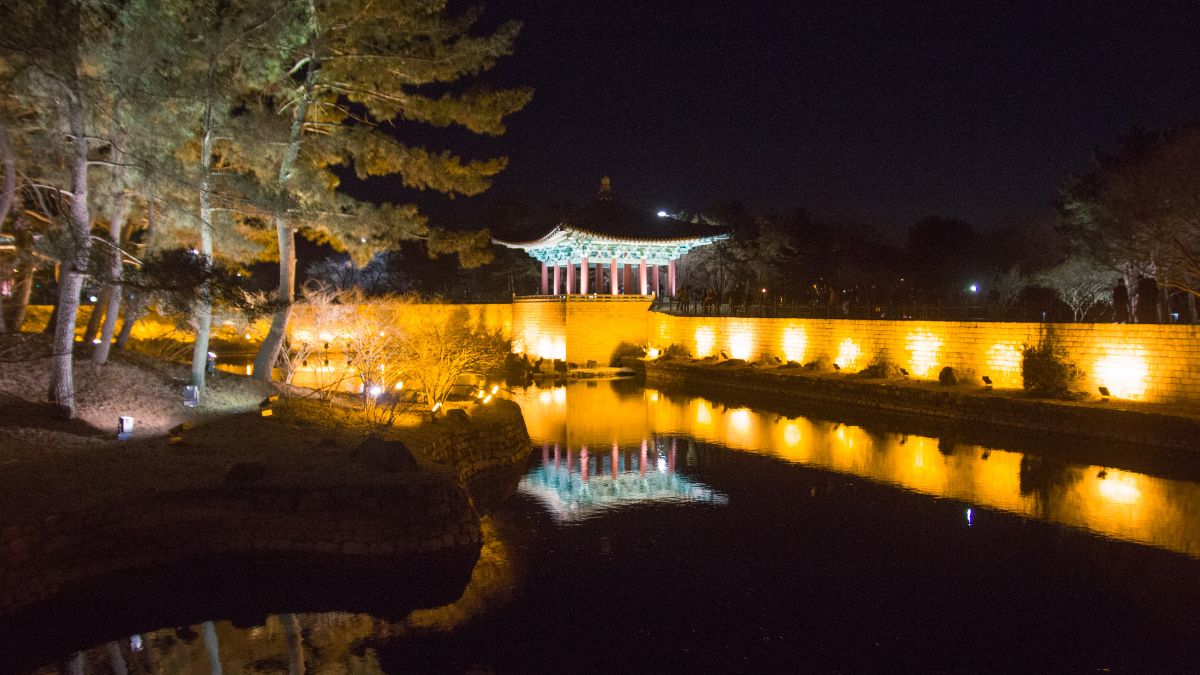
Here is the thing nobody tells you before you book. Gyeongju is sold everywhere as a day trip from Seoul, and it technically works as one. It is also the single biggest mistake I made on my first visit. The entire reason to go is the hour when Donggung Palace and Wolji Pond light up over black water, and that happens after the last comfortable KTX back to Seoul. I spent my first trip watching the clock instead of the reflection. The second time I booked a ₩45,000 guesthouse bed and the trip became a completely different thing.
So this is not a "top ten things to do" list. This is what two nights in Gyeongju alone actually felt like, what I got wrong, how much it cost, and how it compares to Jeonju and Busan, which are the two destinations people always suggest instead. If you are looking for Korea travel tips for foreigners that assume you will be navigating a bus terminal by yourself with no Korean, that is the lens I am writing in.
My Gyeongju Trip Alone: What Two Nights Actually Cost and Felt Like
Getting there, and the station mistake everyone makes
The KTX from Seoul Station to Singyeongju takes about two hours. Standard class runs ₩44,200 one way, roughly US$32, and first class is around ₩69,000 (koreabytrain). There are seventeen departures a day, the first at 05:15 and the last at 21:30, which is more flexibility than I expected for a city this small.
Now the part that caught me out. Singyeongju Station is not in Gyeongju. It sits out in the countryside, and you still need thirty minutes on local bus 60 or 61, or a taxi at ₩12,000 to ₩15,000 for about fifteen minutes, to reach the historic centre. I had budgeted zero minutes for this. I arrived at a station surrounded by fields with a dying phone battery, which is a very specific kind of panic.
The taxi was fine. The driver spoke no English, I showed him the Korean name of my guesthouse on my phone screen, and he nodded and drove. That exchange is the whole skill set, and it works nearly everywhere outside Seoul.
The guesthouse question, which is really a safety question
I stayed at a mixed-dorm guesthouse the first night and a women-only dorm the second. The women-only room cost ₩6,000 more and I slept properly, so that is where my money goes now.
What I want to say clearly is that the mixed dorm was not frightening. Nothing happened. There was no moment of discomfort. The difference was purely in how much of my brain stayed switched on, which turns out to matter a lot when you are travelling without anyone to share the vigilance with. If you are weighing solo female travel Korea options and you are new to hostels, pay the small premium and buy yourself the sleep.
One practical note. Guesthouses in Gyeongju cluster around the Hwangnidan-gil area and the old bus terminal, and the two are a fifteen-minute walk apart. I booked the terminal side my first night because it was cheaper and spent the trip walking back and forth. The Hwangnidan-gil side is worth the extra ₩10,000.
Daereungwon in the morning, and why I went back at night
Daereungwon is a field of grass-covered royal tombs, Silla-era burial mounds the size of small hills, and it costs ₩3,000. It opens at 9am and stays open until 10pm with last admission at 9pm, which is unusually generous for a Korean heritage site.
I went at 9:15am on a Tuesday in October and had whole paths to myself. That is the version people photograph. But I went back after dinner on a whim, and the night version is the one I think about. The mounds become black shapes against a dim sky, the walking paths are lit at ankle height, and there were maybe eight other people in the entire complex. I walked it alone for forty minutes and never once felt I should not be there.
Is that a universal experience? No, and I will not pretend my comfort is a guarantee for anyone else. But it is worth knowing that the option exists, because in a lot of countries a lit historic park at 8:30pm simply is not on the table for a woman by herself.
Donggung Palace and Wolji Pond: the twenty-minute window
This is the reason to stay overnight, so let me be specific about the timing.
The site opens 9am to 10pm, last entry 9:30pm, ₩3,000 for adults and ₩1,000 for children. The advice I wish I had followed on trip one is to enter twenty to thirty minutes before sunset (trendkultur). You want to be standing at the water when the floodlights come up and the sky is still blue rather than black. Arrive after dark and you get a nice photo. Arrive in that window and you get the thing.
The best spot is near the third restored building if you walk clockwise from the entrance, where the pond goes mirror-flat on a still evening. I stood there for close to an hour. A Korean grandmother and I took photos of each other without exchanging a single word of shared language, which happens constantly when you travel alone here and is one of the quiet arguments for doing it.
Seasonal honesty: the lotus blooms run mid-June to early September and peak around mid-July, but July in Korea is a sauna with occasional rain. I have now done October twice and it is the right answer. Cool enough to walk all day, light enough in the evening, and the crowds thin out.
Hwangnidan-gil, and eating alone in Korea
Hwangnidan-gil is a strip of renovated hanok houses turned into cafés and shops, free to walk, three minutes from the back gate of Daereungwon, with most cafés running roughly 10am to 9pm (visitkorea4u).
I will be blunt about the thing that stops a lot of people from travelling alone in Korea: eating. Korean restaurant culture is built around shared dishes and some places genuinely will not serve a single diner a two-person stew. It is not rudeness, the portion does not exist. I have been turned away twice in my life here and both times it stung.
Gyeongju made this easier than Seoul did. The ssambap restaurants near the tomb complex seated me without hesitation, cafés on Hwangnidan-gil are full of solo customers with laptops, and the convenience stores are a legitimate dinner option that nobody judges you for. My actual best meal was a ₩9,000 bowl of ssambap at a place with six tables, eaten at 1pm with a book, in total peace.
What the two nights cost me
KTX return came to ₩88,400. Two guesthouse nights ran ₩96,000 for the dorm beds including the women-only upgrade. Entrance fees across Daereungwon, Donggung Palace and Bulguksa totalled ₩9,000. Food, coffee, local buses and one taxi came to about ₩85,000. Call it ₩280,000 for the weekend, under US$210, and the single most expensive line item was the train.
The three things I got wrong
I tried to do it as a day trip. Five or six hours in the city sounds like plenty until you realise the best hour happens after you have left.
I rented a bike on the hottest afternoon. Gyeongju is genuinely flat and cyclable and the bike was ₩10,000, but I did it at 2pm in direct sun and gave up after an hour. Morning or late afternoon only.
I did not download the offline map. Naver Map is the one that works in Korea rather than Google Maps, and rural bus stops are where you find out your data plan is struggling. Screenshot your route before you leave the guesthouse wifi.
How Gyeongju Compares to Jeonju and Busan for a Solo Trip
Every time I recommend Gyeongju, somebody says "but what about Jeonju" or "just go to Busan." Both are fair. They are different trips.
Jeonju: the easier first solo trip
Jeonju is closer. The KTX takes about one hour fifty minutes and fares sit around ₩22,500 to ₩28,000 depending on the service (asiaodysseytravel), and a taxi from Jeonju Station to the Hanok Village is fifteen minutes at ₩7,000 to ₩8,000. Cheaper, faster, and the station transfer is less of a shock.
The Hanok Village is also denser than Gyeongju. Everything is within a twenty-minute walk, which when you are alone means less time standing at bus stops working out which direction is which. And the food is the point, which solves the solo-dining problem outright, because street food and bibimbap are both one-person formats.
What you give up is space and quiet. Jeonju on a Saturday is shoulder-to-shoulder with couples in rented hanbok. Gyeongju spreads across a valley and you can be genuinely alone in it. Pick Jeonju if this is your first solo trip outside Seoul and you want everything in one walkable block.
Busan: the city option
Busan is about two hours thirty-six minutes by KTX with fares ranging widely from roughly US$19 up to US$42 depending on how far ahead you book. It is a full city with beaches, a subway system, English signage and nightlife, so in practical terms it is the lowest-friction destination on this list.
But it is a city, and if you are coming from Seoul you already live in a city. My honest experience is that Busan alone felt like Seoul alone with better sea air. Gyeongju felt like leaving. Pick Busan if you want a solo trip with the safety net of infrastructure, or if you are nervous about rural transport.
What about just a Seoul day trip?
Worth saying, because not every weekend needs a train ticket. A Seoul day trip guide that actually serves solo travellers would point you at Suwon's fortress wall or the Bukhansan trails, both reachable on a transit card, both doable on a whim, both costing under ₩20,000 for the day. I do this far more often than I take the KTX anywhere. It is just a smaller experience, and it never produces the slightly dazed feeling of the Wolji Pond hour.
Comparison: Which Trip Fits Which Traveller?
| Gyeongju | Jeonju | Busan | |
|---|---|---|---|
| KTX from Seoul | ~2h, ₩44,200 | ~1h50m, ₩22,500~28,000 | ~2h36m, US$19~42 |
| Station to centre | 15~30 min, extra ₩12,000 taxi | 15 min, ₩7,000~8,000 taxi | Subway, direct |
| Walkability | Spread out, bikes help | Very compact | City transit |
| Solo dining ease | Good | Easiest | Easiest |
| Best for | Quiet, history, night views | First solo trip | Infrastructure and beaches |
| Overnight needed? | Yes, strongly | Optional | Yes |
A short version if you are deciding right now:
- Go to Gyeongju if you want one unforgettable evening and do not mind planning transport
- Go to Jeonju if this is your first time travelling alone in Korea and you want everything walkable
- Go to Busan if you want a solo trip where nothing can logistically go wrong
Frequently Asked Questions
Is solo travel in Korea as a woman actually safe at night?
In my experience, yes, and the data supports it. Korea's crime index sits around 22.66 and the country ranks in the global top ten for solo female travel safety, with Seoul placing seventh on the 2025 State of Travel Insurance safest destinations report. Street harassment is uncommon compared with most Western cities, and I have walked lit paths in Gyeongju at 8:30pm alone without discomfort. That said, safe does not mean you switch your judgement off. I still avoid empty alleys behind nightlife districts, I still screenshot my route, and I still tell one person where I am sleeping.
Can you visit Gyeongju as a day trip from Seoul, or do you need to stay overnight?
You can, but you will miss the best part. A day trip leaves you five or six hours in the city, which covers Daereungwon, lunch and Bulguksa Temple, but Donggung Palace and Wolji Pond are at their best in the twenty minutes before sunset and the hour after. The last KTX back to Seoul leaves at 21:30, so the maths is tight and anxious. A guesthouse dorm bed costs ₩45,000 to ₩55,000 and changes the entire trip. If you genuinely only have one day, go to Jeonju instead.
How do you eat alone in Korea if restaurants serve two-person portions?
Three things work. First, pick dishes that are inherently single-serve: bibimbap, ssambap, kalguksu, gimbap and most rice bowls. Second, go at off-peak hours, around 1:30pm or 8:30pm, when a table costs the restaurant nothing. Third, cafés and convenience stores are socially neutral in Korea and nobody will look at you twice. Gyeongju was easier than Seoul for this, since the ssambap places near the tomb complex seated me straight away. I was refused service twice in my first year here and it is worth knowing it happens so it does not feel personal when it does.
What Korea travel tips for foreigners matter most outside Seoul?
Four, in order of how much trouble they saved me. Use Naver Map, not Google Maps, and screenshot your route before you leave wifi. Carry a T-money card, because rural buses take it and often will not take a card from your home country. Save your accommodation's name in Korean characters on your phone to show taxi drivers. And check which station your KTX actually stops at, since Singyeongju for Gyeongju and several other high-speed stations sit well outside the town they are named after.
When is the best season to visit Gyeongju?
October, without much hesitation. Daytime temperatures let you walk for hours, evenings are comfortable enough to stand at Wolji Pond for an hour, and crowds are thinner than spring. Mid-June to early September brings the lotus blooms at Wolji Pond, peaking around mid-July, but Korean summer humidity turns all-day walking into endurance. April gives you cherry blossoms along Bomun Lake with correspondingly heavier crowds and pricier rooms. Winter is quiet and the snow reflections are beautiful, with the trade-off that you will not want to stand outside past twenty minutes.
Do you need to speak Korean to travel alone in Korea?
No, but you need three habits. Learn to read the hangul alphabet, which takes a couple of hours and makes bus signs and menus navigable. Keep Papago on your phone rather than Google Translate, since it handles Korean far better. And accept that pointing at a phone screen is a complete and dignified way to communicate. I have had entire successful interactions here without a shared word, including a taxi to a guesthouse down a lane the driver did not know. Outside Seoul the English level drops noticeably, and it genuinely does not matter as much as you expect.
Final Verdict: Where Should You Go on Your First Solo Trip in Korea?
After three visits, two of them alone, here is where I land. Solo travel in Korea as a woman is one of the easier things I have done in my adult life, and the hardest part was never safety, it was logistics and the small social friction of eating by yourself.
Choose Gyeongju if you want one evening you will still be describing to people a year later. Budget ₩280,000 for two nights, book a women-only dorm near Hwangnidan-gil, go in October, and enter Donggung Palace twenty-five minutes before sunset. Do not attempt it as a day trip.
Choose Jeonju if this is your first solo trip outside Seoul. Under two hours, under ₩30,000 each way, everything walkable, and the food culture removes the solo-dining question entirely.
Choose Busan if you want the reassurance of subways, English signage and a city that never closes.
The summary I would give a friend over coffee: Korea is statistically one of the safest places in the world to travel alone as a woman, and unaccompanied female travellers now make up 42% of non-group foreign arrivals, so you will not be an anomaly. Gyeongju is the trip worth building a weekend around, Jeonju is the gentler entry point, and Busan is the one where nothing can go wrong. All three are under three hours from Seoul Station, which is still the detail I find most absurd about living here.
For opening hours, ticket prices and seasonal events before you book, check the official Visit Korea site.