Personal Color Analysis in Seoul: Is It Worth It? My Honest Answer First
Short answer: yes, but only if you book the right tier for the right reason. I paid ₩80,000 for a 30-minute mini session at Cocory Color in Hongdae, and five months later I still open the digital color card in the fitting room at Zara. That is the test I use now. Not "was it fun" but "do I still use it."
Here is the thing nobody tells you before you book. The ₩80,000 mini session and the ₩300,000 premium session are not the same product with different amounts of time. They answer different questions. The mini session tells you which colors to wear. The premium session tells you which colors to wear, plus your foundation shade, plus your jewelry metal, plus your best necklines. If you only want to stop buying the wrong sweaters, the cheap one is enough. I wasted money finding that out, so let me save you the detour.
I have now done three sessions in Seoul over two years, in three different price brackets, in Korean and in English. Below is what actually happened in each one, what I got wrong, and how I would book it if I were starting over today.
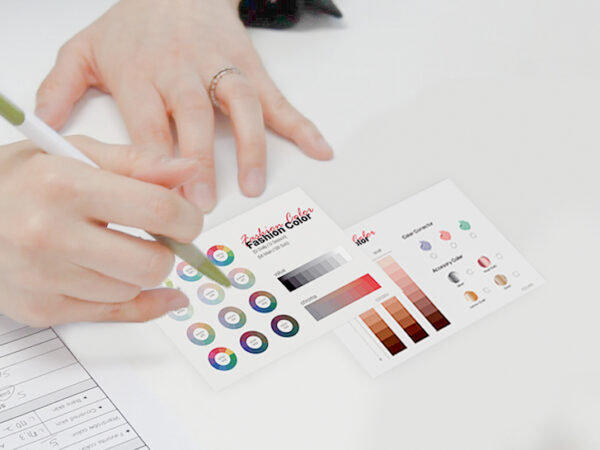
My Cocory Color Hongdae Session: What ₩80,000 Actually Buys You
Booking it as a foreigner
I messaged them on WhatsApp. That is it. No Korean phone number, no Naver account, no KakaoTalk ID required, which matters because the Naver reservation system is where most foreigners give up. I asked for an English session, they confirmed the slot in about four hours, and I paid on arrival.
The studio sits near Yeonhui-ro in Seodaemun-gu, which is technically closer to Hongje than to the Hongdae party streets. Budget fifteen extra minutes if you are coming from Gangnam. I did not, and I arrived sweaty and pink-faced, which is genuinely the worst possible condition for a color analysis. More on that mistake later.
The skin measurement part that surprised me
I expected draping. I did not expect a device. They used a CUBE skin colorimeter on my inner forearm and my cheek, which reads your actual skin values rather than relying on the consultant's eye. Then they showed me the numbers.
Why does this matter? Because it removes the part of color analysis I was most skeptical about. If a consultant simply looks at you and announces "cool summer," you have no way to argue. When a device tells you your skin sits on the cool side with medium depth, and then the fabric draping confirms it, you have two independent signals pointing the same direction. That is the difference between a diagnosis and an opinion.
What draping 125 colors actually feels like
They drape fabric after fabric under your chin while you look in the mirror. The first ten feel like nothing. Honestly I thought the whole thing was nonsense for about four minutes.
Then they put a specific muted olive under my face and my under-eye circles looked like someone had turned a dimmer switch. Not better lighting. Darker. Then they swapped to a cool rose and the shadows lifted. Same mirror, same light, same face. That was the moment I stopped being skeptical.
My result was one daily tone, three best colors, and a comparison across all four seasonal tone groups plus five achromatic levels, meaning they tested where my black-to-white range breaks. Mine breaks early. Pure black makes my jaw look heavy. Charcoal does not. I had owned four black turtlenecks and could not explain why I never felt right in any of them.
What I took home
A printed result chart and a digital color card for my phone. The digital one is the part that earns its money. I have used it in Olive Young to narrow down lip tints, in Musinsa to filter by color, and once in a Daiso aisle to decide between two phone cases, which is admittedly ridiculous.
What I would do differently
Three mistakes, all mine.
I wore makeup. They removed it, which ate into my 30 minutes. Arrive bare-faced.
I went in the afternoon after walking around. Flushed skin shifts your reading. Book a morning slot.
I booked solo at the solo rate. Going alone cost ₩80,000 for 30 minutes. Two people is ₩140,000 for 50 minutes, which is ₩70,000 and 25 minutes each. Three people is ₩210,000 for 70 minutes. You get a better rate and you get to watch someone else being draped, which teaches you more than your own session does because you can actually see the effect from outside. If you have a travel companion, bring them. Prices are listed openly on the Cocory Color site.
How Does It Compare to Onlee Color and Color Place?
Onlee Color, Hongdae — the middle option
Onlee runs a premium package at ₩140,000 for 80 minutes, with a basic tier roughly $45 below that. English sessions are available and you may bring one companion, though only one.
What you get for the extra money is scope, not accuracy. The premium covers makeup, jewelry metals, hair color, and even fragrance direction alongside the swatches. I did my second session here, and the jewelry section was the part I genuinely did not expect to care about. I had been wearing yellow gold for years because it was what I inherited. Silver sat better against my skin by a margin that was embarrassing once I saw it side by side.
The hair color consultation is also worth flagging for anyone planning a salon appointment in Seoul. Walking into a Korean hair salon with a specific tone code instead of a Pinterest screenshot changes the entire conversation, especially if your Korean is limited.
Color Place, Gangnam — the full premium experience
My third session was the expensive one, around £140 at the time. The consultant worked through 149 seasonal drapes to land on a sub-tone within my season, then tested my own makeup bag product by product and matched me to a foundation shade. I walked out with a written report and two fabric swatch books.
Was it four times better than my ₩80,000 session? No. The season result was the same, which was reassuring and also slightly annoying. What it added was depth within the result and a styling layer that the mini session never claims to cover, including face shape, necklines, glasses frames, and eyebrow tone. The surprise finding was navy, a color I had avoided my whole adult life, turning out to be one of my strongest.
Across the market in 2026, one-to-one sessions generally run ₩100,000 to ₩180,000, English-language sessions cluster around ₩120,000 to ₩180,000, and the premium Gangnam and Apgujeong studios can pass $300. Group rates drop to roughly ₩80,000 to ₩120,000 per person for two, and ₩60,000 to ₩90,000 per person for three or more.
What is the 12-tone system, and why do Korean studios use it?
The Western four-season model sorts you by undertone and brightness. Korean studios add depth as a third axis, splitting each season into three, which gives twelve types: bright, warm, and light spring; light, cool, and soft summer; soft, warm, and dark autumn; dark, cool, and bright winter. Most Seoul studios work from the CCCS 12-tone framework alongside the KS color system.
In practice the extra axis is why two people can both be "autumn" and look terrible in each other's clothes. Depth is the variable that decides whether your season's palette needs to arrive pale and dusty or saturated and heavy. It is also why a four-season result from an online quiz tends to feel useless. It gives you a third of the information.
Which Session Should You Book? A Straight Comparison
| Cocory mini, Hongdae | Onlee premium, Hongdae | Color Place premium, Gangnam | |
|---|---|---|---|
| Price | ₩80,000 solo / ₩140,000 for two | ₩140,000 | approx. ₩250,000+ |
| Length | 30 min solo, 50 min for two | 80 min | roughly 2 hours |
| Drapes | 125 fashion colors | full seasonal set | 149 drapes, 25 sub-tones |
| Skin measurement device | Yes, CUBE colorimeter | No | No |
| Makeup testing | No | Yes | Yes, on your own products |
| Jewelry and hair | No | Yes | Yes |
| Styling and face shape | No | Partial | Yes |
| Take-home | Result chart, digital card | Swatches, consultation notes | Written report, 2 swatch books |
| English | Yes | Yes | Yes, via translator |
Who should book what:
- You want to stop buying the wrong clothes, and that is all → mini session, and bring a friend to split the rate
- You are booking a hair appointment or rebuilding your makeup bag in Seoul → mid-tier premium around ₩140,000
- This is a once-in-a-lifetime trip and you want the full styling package → Gangnam premium, and book it four to six weeks out
Frequently Asked Questions
How much does personal color analysis in Seoul cost in 2026?
Expect ₩80,000 to ₩180,000 for most sessions, with premium Gangnam and Apgujeong studios reaching $300 or more. English-language sessions typically sit at ₩120,000 to ₩180,000 because studios either staff a bilingual consultant or bring in an interpreter. Group bookings cut the per-person cost significantly, down to around ₩60,000 to ₩90,000 each for three or more people. The cheapest honest option is a mini session split between two friends.
Do I need to speak Korean to get a personal color analysis in Seoul?
No. Many Seoul studios now run English sessions directly, and others bring in a professional interpreter for the consultation. Booking is usually the easier part, because WhatsApp, Instagram DM, and email are all accepted at foreigner-friendly studios. If a studio only takes Naver reservations and only replies in Korean, it is not worth the struggle. There are too many good alternatives that will answer you in English within a day.
How far in advance should I book, and what should I bring?
Book two weeks ahead for a weekday slot and four to six weeks for a weekend or a peak travel month. Arrive with no makeup, no fake tan, and hair pushed back off your face. Wear a plain white or neutral top you can pull down at the neckline, since a bright shirt will contaminate every drape. Bring your current foundation and two lipsticks you are unsure about if the package includes makeup testing, because testing products you already own is more useful than being handed a list of new ones.
Is personal color analysis accurate, or is it just a fun tourist activity?
It is more reliable than I expected, with one caveat. I got the same season across three studios at three price points over two years, which suggests the core diagnosis is stable. What varied was the sub-tone label and the styling advice attached to it. Treat the season and depth as solid information, and treat the specific "your perfect shade is this exact pink" claims as a starting point rather than a rule. Studios that measure your skin with a device instead of eyeballing it give you something you can check.
What do I actually do with the results after I go home?
Keep the digital color card on your phone and use it as a filter, not a law. Mine changed three concrete things: I stopped buying pure black knitwear and switched to charcoal, I moved from yellow gold to silver jewelry, and I finally bought navy. I also take screenshots of my palette into online shopping, which is where it saves the most money, since returning clothes in Korea is tedious enough that avoiding the purchase is the real win.
Final Verdict and Summary
Personal color analysis in Seoul is worth it, provided you match the tier to the question you actually have. Cocory Color's ₩80,000 Hongdae mini session is the best value entry point, mostly because the CUBE skin measurement adds a layer of evidence that pure draping does not, and because the digital color card survives the trip home. Onlee Color at ₩140,000 is the right call if you want jewelry, hair, and makeup guidance in one sitting. Gangnam premium studios around ₩250,000 and up make sense only if you want full personal styling alongside the palette. Book two to six weeks ahead, arrive bare-faced in the morning, and bring a friend to cut the per-person cost nearly in half.
One last thing. The value is not in learning your season. It is in the six months afterward, when you stop buying things that make you look tired. That part is free.